

Chicken Road isn't just another crash-style game—it's a high-stakes duel where timing, risk tolerance, and cool-headed discipline decide your outcome. In this guide, we break down the Chicken Road Bonus battle mechanics with zero fluff: how the multiplier builds, why players lose too early (or too late), and how to approach sessions with a realistic, bankroll-aware mindset.
Forget "guaranteed wins" or "secret hacks." This isn't about beating the system—it's about understanding it so you can play consciously, control your exposure, and walk away on your terms.
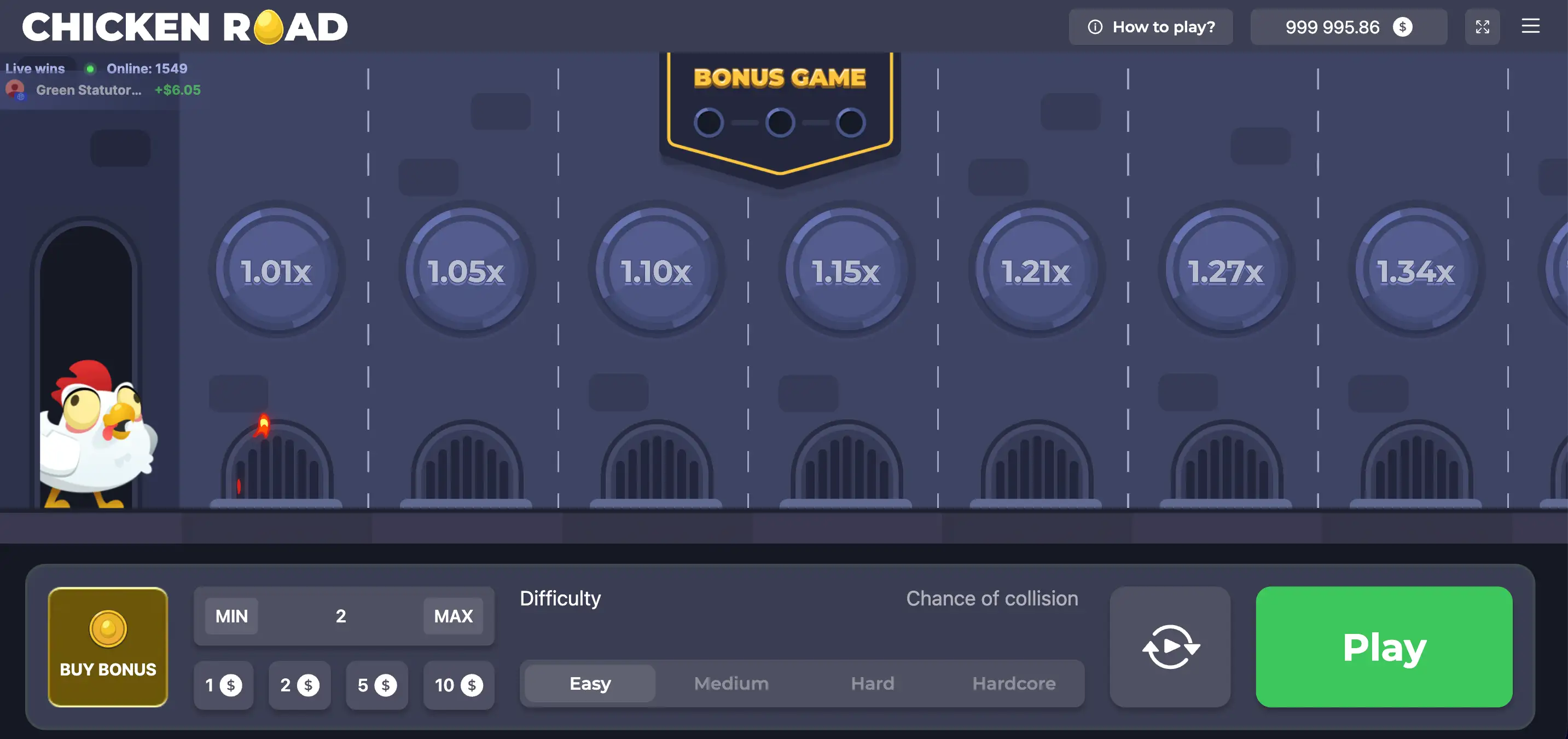
The Chicken Road Bonus is structured as a 1v1 race against an AI opponent (or another player in multiplayer variants). Both participants watch a shared multiplier climb from 1.00x upward. At any moment, either side can "chicken out"—cashing in at the current multiplier. If you stay in while your opponent bails, you win their stake multiplied by the current value. But if both wait too long and the "crash" hits, both lose.
| Mechanic | Description | Player Impact |
|---|---|---|
| Shared multiplier | Rises in real time, same for both players | Creates synchronized tension |
| Independent exit | Each player decides when to cash out | No coordination needed; pure nerve test |
| Crash point | Randomly determined before each round (hidden) | Unpredictable outcome; no patterns |
| Operator fee | Small percentage or algorithmic balancing | Ensures negative EV long-term |
This setup exploits psychological tension—fear of missing out (FOMO) vs. fear of total loss. Most players lose not from bad math, but from emotional overcommitment.
According to search data, Chicken Road offers multiple difficulty modes that fundamentally alter risk/reward ratios. Understanding these tiers is essential for choosing a mode that matches your bankroll and session goals.
| Level | Steps | Starting Multiplier | Max Multiplier | RTP | Best For |
|---|---|---|---|---|---|
| Easy | 24 | 1.02x | 24.5x | 96% | Beginners, low-risk sessions |
| Medium | 22 | 1.11x | 2,254x | 88% | Balanced risk/reward |
| Hard | 20 | 1.22x | 52,067x | 80% | High-risk chasers |
| Hardcore | 15 | 1.63x | 3,203,384x | 60% | Maximum volatility seekers |
Strategic implications: Easy mode offers the highest RTP (96%), making it the safest choice for extended sessions. Hardcore mode's 60% RTP means you're statistically guaranteed to lose 40% of your total stake over time—only pursue this if you're chasing the extreme max multiplier for entertainment, not profit.
Based on observable behavior in crash and battle games like Chicken Road, >80% of losses stem from one of two errors:
Real edge comes from consistency and boundaries—not prediction.
Choose your bet amount between $0.01 and $200 (limits vary by platform). Never risk more than 1–2% of your session bankroll per round.
Pick Easy, Medium, Hard, or Hardcore based on your risk tolerance. Remember: higher max multipliers come with drastically lower RTP and more frequent total losses.
The multiplier begins climbing from 1.00x. Both you and your opponent watch the same rising value. The crash point is already predetermined by the RNG but hidden.
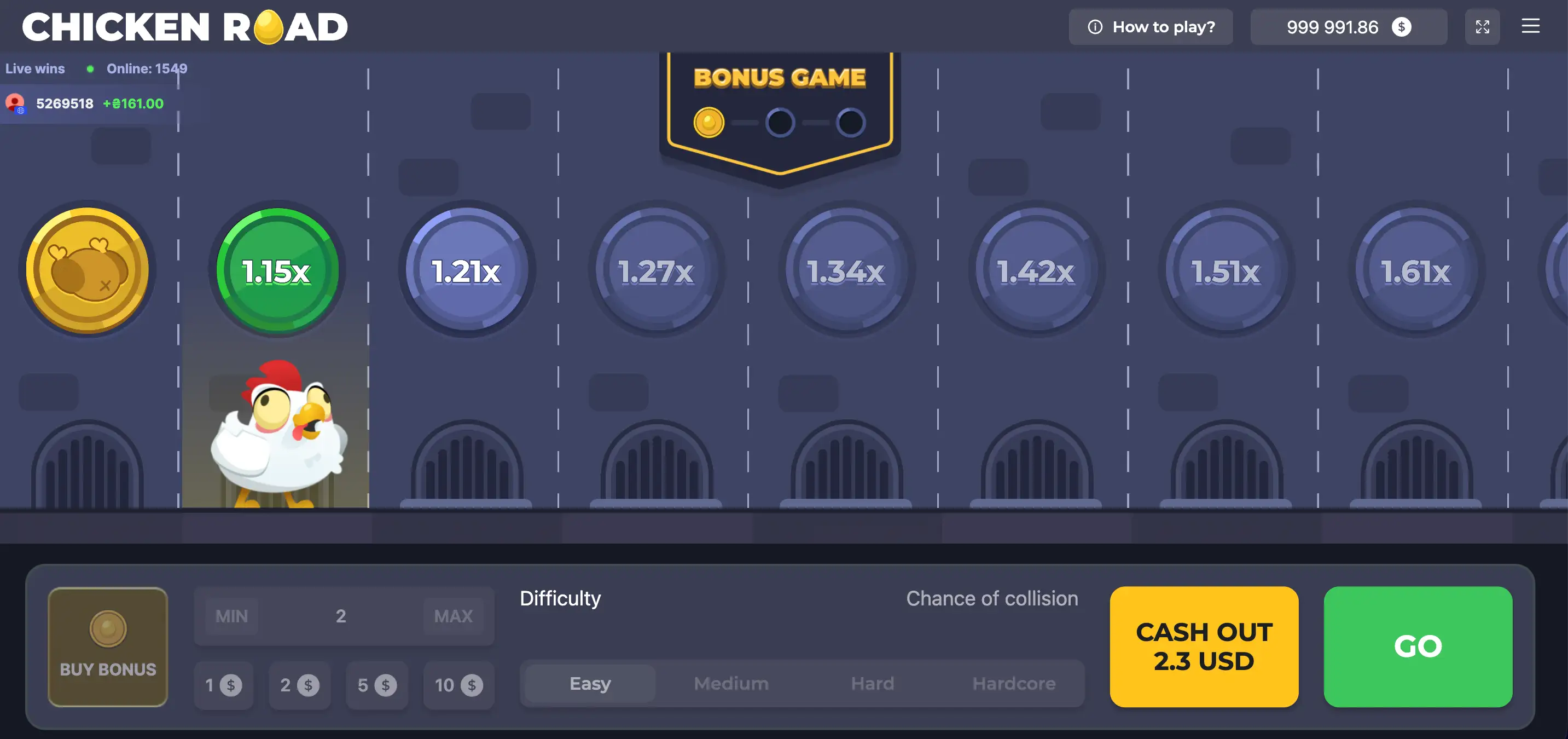
Click "Go" to advance one step (in lane-crossing variants) or "Cash Out" to secure your current multiplier. If you cash out first, you take your winnings. If your opponent bails before the crash, they escape—but if both of you stay past the crash point, both lose everything.
Either someone cashes out successfully, or the crash hits and eliminates all remaining players. Review your result, resist the urge to chase losses, and stick to your session limits.
Chicken Road is high-volatility by design. A single round can wipe your session stake. To play responsibly:
Remember: the expected value (EV) of most crash/battle games is negative due to built-in operator margins. As Gambling101 explains, "Almost all casino games have negative EV for the player—that's how the house makes money." Your goal isn't profit—it's controlled entertainment with known risk.
No. Chicken Road outcomes are driven by a certified Random Number Generator (RNG). Each round's crash point is determined independently at the start, with no connection to prior results.
This means:
The only reliable "strategy" is pre-commitment: decide your exit point before the round begins, and never override it mid-game.
Unlike solo crash games (e.g., Aviator, JetX), Chicken Road adds psychological pressure from an opponent. This changes player behavior—even if the underlying odds are similar.
| Feature | Chicken Road (Battle Mode) | Classic Crash (e.g., Aviator) |
|---|---|---|
| Opponent | Yes (AI or human) | No |
| Decision Trigger | "Will they bail before me?" | "How high will it go?" |
| Risk of Total Loss | High (both lose if crash hits) | High (you lose if you don't cash out) |
| Psychological Pressure | Very high (competitive tension) | Moderate (internal FOMO) |
| Gameplay Feel | Arcade-style, movement-based | Pure multiplier watching |
Some experienced players employ a 1.5x-and-exit auto-cashout rule to minimize variance. Here's how it works and when it fails:
Configure the platform's auto-cashout feature to automatically exit every round at 1.5x multiplier. This guarantees small, consistent wins on successful rounds.
When the multiplier reaches 1.5x before crashing, you lock in a 50% profit on that round. This happens more often in Easy/Medium modes.
When the crash hits before 1.5x, you lose your entire stake. In high-volatility modes (Hard/Hardcore), this happens frequently enough to negate your small wins over time.
The biggest failure point: after several early crashes, players manually override auto-cashout and chase higher multipliers. This destroys the entire strategy. Stick to the rule or don't use it at all.
Chicken Road is designed for short, high-adrenaline sessions. It is not a path to profit. If you find yourself:
—stop immediately and take a break. Gambling should never feel like an obligation or a solution to financial stress.
Always:
If the platform uses a certified RNG and is licensed by a reputable authority (e.g., MGA, UKGC), outcomes are statistically fair—but still weighted in the operator's favor over time. Offshore sites (e.g., Curaçao-licensed) may offer less transparent auditing.
No. Due to negative expected value (EV) and random crash points, consistent profit is mathematically impossible long-term. Short-term wins are possible, but variance will eventually align with the house edge.
There is no "best"—only what aligns with your risk tolerance. Conservative players target 2x–3x; aggressive players aim for 5x–10x but face higher loss frequency. Regardless, decide before the round starts.
No. The crash point is predetermined. Your opponent's action only determines whether you win their stake—but if you both stay in past the crash point, you both lose regardless.
Easy mode (96% RTP) is best for beginners and bankroll preservation. Medium (88% RTP) offers balanced risk/reward. Hard and Hardcore modes have drastically lower RTPs (80% and 60%) and are only suitable for players chasing extreme multipliers purely for entertainment, not profit.
Chicken Road adds an opponent (AI or human), creating psychological pressure that Aviator lacks. Chicken Road also features arcade-style movement mechanics, while Aviator is a pure multiplier-watching experience. Both are negative EV games, but Chicken Road's competitive element makes it more addictive for some players.
Yes, many platforms offer a free demo version where you can test difficulty levels, practice timing, and understand mechanics without risking real money. Always use demo mode first to learn the game's rhythm before playing with real stakes.
No. All outcomes are determined by a certified RNG before the round starts. "Strategies" like Martingale betting, pattern tracking, or timing systems do not improve your mathematical edge. The only reliable approach is strict bankroll management and pre-committed exit rules.